China Top 10 Laser Marker Machine Manufacturers?
China’s laser manufacturing sector has changed quickly. Today, a laser marker machine may mark steel tools, phone components, medical devices, and ceramic parts. The best suppliers combine stable lasers, precise motion systems, responsive software, and dependable technical support. Yet choosing a manufacturer requires more than reading a ranking.
This guide examines ten leading Chinese manufacturers through practical criteria. These include marking speed, beam quality, machine lifespan, software usability, safety design, certifications, and after-sales service. Factory experience also matters. A clean production line, consistent sample results, and clear test reports can reveal more than polished brochures. Buyers should request samples on their actual materials, such as anodized aluminum, stainless steel, or black plastic. Small details matter. Contrast, edge sharpness, and heat damage are easy to compare.
Laser pioneer Theodore Maiman once said, “The laser is a solution looking for a problem.” His observation remains useful here. A powerful source alone does not guarantee a suitable laser marker machine. The correct wavelength, lens, power range, and marking method must match the application. Fiber, CO2, ultraviolet, and green lasers each have different strengths. This article is not a perfect verdict. Supplier capabilities change, and published specifications may not tell the whole story. Some manufacturers offer excellent machines but weaker support in distant markets. Others may provide strong service while lacking advanced automation. Careful verification remains essential. The following list offers a practical starting point for informed comparison, not a substitute for testing and professional assessment.
What Is a Laser Marker Machine?
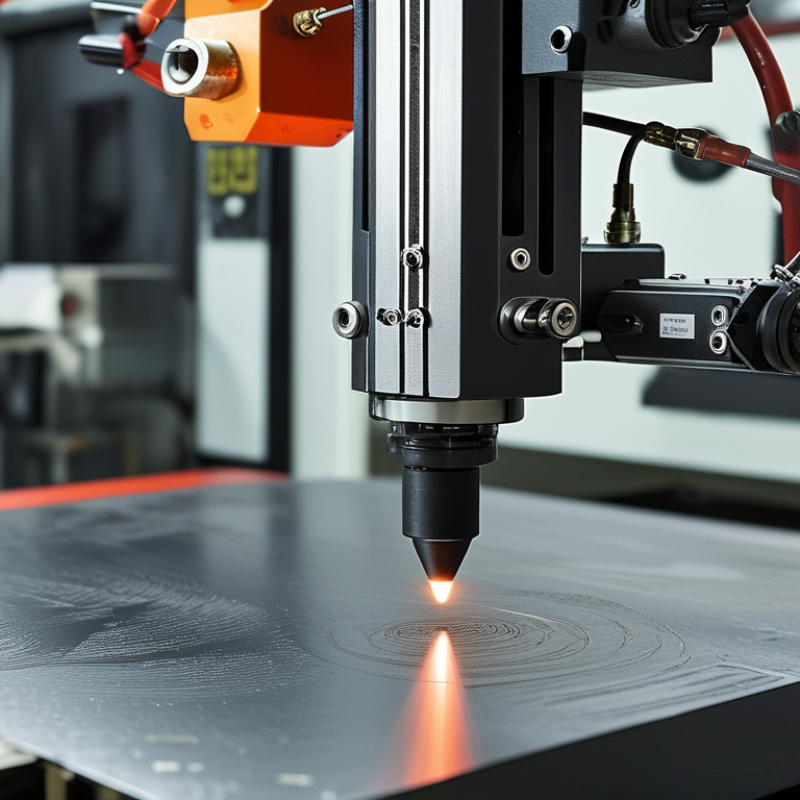
A laser marker machine uses a focused light beam to create permanent marks on a material. It changes the surface through controlled heating, melting, foaming, or slight color alteration. Common systems include fiber, CO₂, and ultraviolet lasers. Each type suits different materials and marking depths. A fiber laser often handles metal parts, while CO₂ equipment works well on wood, glass, and certain polymers.
The machine combines a laser source, scanning mirrors, a focusing lens, software, and a workholding area. Galvanometer mirrors move the beam rapidly across the surface. The operator adjusts power, speed, frequency, focus, and line spacing. Small changes matter. A mark may appear sharp at the center but weaken near the edges if the focus is wrong. Industrial users typically verify contrast, readability, heat impact, and cycle time before production.
Market research supports this expanding role. Grand View Research estimated the global laser marking machine market at roughly USD 3.4 billion in 2023, with continued growth projected through 2030. MarketsandMarkets has also forecast strong expansion, driven by traceability and automated manufacturing. These figures describe market potential, not guaranteed performance. In practice, reflective metals, dusty lenses, uneven surfaces, and unsuitable settings can reduce quality. I have found that sample testing remains essential, even when a specification sheet looks convincing. A reliable evaluation should inspect repeated marks, maintenance needs, enclosure safety, and data accuracy under real factory conditions.
How China’s Top Laser Marker Manufacturers Are Evaluated
China Top 10 Laser Marker Machine Manufacturers?
How China’s Top Laser Marker Manufacturers Are Evaluated
Evaluating China’s top ten laser marker manufacturers requires more than comparing catalog prices. A serious review begins with traceable production evidence. Inspect the factory, calibration records, and final inspection process. Ask who builds the optical path and control system. Test the same file on metal, plastic, and coated parts. Watch the edges under magnification. Clean contrast matters more than a bright showroom sample. A short demonstration is not enough.
Technical scoring should cover laser source stability, galvanometer accuracy, software control, cooling, enclosure safety, and interlocks. Check documents against applicable safety standards. Request a timed trial using the buyer’s actual material. Record marking speed, repeatability, noise, and heat. Reliable manufacturers explain limits, not only peak performance. They provide training records, spare-part guidance, and measurable warranty terms. Claims need evidence.
Service quality often separates a capable supplier from a risky purchase. Ask for response times, remote diagnosis procedures, and local support options. Speak with several long-term users, if possible. Their maintenance history may reveal more than a brochure. Total cost includes lenses, filters, downtime, and software updates. A low quote can become expensive after installation. No scorecard is perfect. Sample size, operator skill, and material variation can distort results. A transparent evaluation should record those weaknesses beside the final rating.
China’s Top 10 Laser Marker Machine Manufacturers
China’s top ten laser marker machine manufacturers represent a broad range of industrial solutions. Their equipment commonly includes fiber, CO2, and ultraviolet systems. Each laser type suits different materials and production needs. Fiber machines often mark steel parts quickly, while UV systems handle sensitive plastics with less heat. Experienced buyers should inspect power stability, marking speed, lens quality, and software control. A clear sample test is more useful than a polished catalogue.
Reliable manufacturers usually provide machine specifications, safety documentation, installation guidance, and responsive technical support. Check the frame strength, emergency stop function, enclosure design, and ventilation details. Ask for test marks on your actual components. A small aluminum plate can reveal blurred edges, uneven depth, or poor contrast. I would also compare warranty terms and spare-part availability. A low price may become expensive when production stops.
Tips: Request a written sample report. Measure cycle time, mark readability, and repeatability. Confirm compatibility with your factory voltage and workflow. Visit a production site if possible. Online claims can be incomplete. Even a respected supplier may offer a model that does not fit your material, so review the results carefully before ordering.
China Top 10 Laser Marker Machine Manufacturers? - China’s Top 10 Laser Marker Machine Manufacturers
| Rank | Anonymous Manufacturer Profile | Primary Laser Type | Typical Power | Typical Wavelength | Marking Area | Marking Speed | Common Materials | Typical Applications |
|---|---|---|---|---|---|---|---|---|
| 1 | Industrial Fiber-Laser Specialist | Pulsed fiber laser | 20–50 W | 1,064 nm | 110 × 110 to 300 × 300 mm | Up to 7,000 mm/s | Stainless steel, aluminum, brass, plastics | Part identification, serial numbers, barcodes, industrial traceability |
| 2 | High-Precision UV Marking Specialist | Ultraviolet laser | 3–15 W | 355 nm | 100 × 100 to 200 × 200 mm | Up to 3,000 mm/s | Glass, ceramics, plastics, coated metals, electronic components | Electronics, medical components, delicate plastics, fine-detail marking |
| 3 | CO₂ Nonmetal Marking Specialist | CO₂ laser | 30–60 W | 9.3–10.6 µm | 100 × 100 to 300 × 300 mm | Up to 5,000 mm/s | Wood, acrylic, paper, leather, glass, rubber, painted surfaces | Packaging, promotional products, furniture, leather goods, signage |
| 4 | Automated Production-Line Integrator | Fiber or UV laser | 20–30 W | 355 or 1,064 nm | 110 × 110 to 200 × 200 mm | Line-dependent | Metals, plastics, electrical parts, assembled components | Inline coding, automated inspection, conveyor-based production |
| 5 | Deep-Engraving Machine Specialist | High-power pulsed fiber laser | 50–100 W | 1,064 nm | 110 × 110 to 200 × 200 mm | Up to 4,000 mm/s | Tool steel, stainless steel, titanium, hardened metals | Molds, tools, automotive parts, permanent deep engraving |
| 6 | Large-Format Marking System Specialist | Fiber laser with scanning extension | 20–50 W | 1,064 nm | 300 × 300 to 600 × 600 mm | Up to 5,000 mm/s | Large metal panels, plates, profiles, industrial assemblies | Large-part identification, fabrication, steel and machinery industries |
| 7 | Compact Desktop Marker Specialist | Compact fiber laser | 20–30 W | 1,064 nm | 70 × 70 to 175 × 175 mm | Up to 6,000 mm/s | Metal parts, tools, nameplates, coated components | Workshops, laboratories, small-batch manufacturing, personalized products |
| 8 | Rotary and 3D Marking Specialist | Fiber laser with rotary axis | 20–50 W | 1,064 nm | 110 × 110 to 200 × 200 mm | Up to 5,000 mm/s | Cylindrical metals, rings, bottles, tubes, curved components | Jewelry, drinkware, cylindrical tools, curved industrial parts |
| 9 | Color-Marking Fiber Laser Specialist | MOPA fiber laser | 20–60 W | 1,064 nm | 110 × 110 to 300 × 300 mm | Up to 7,000 mm/s | Anodized aluminum, stainless steel, engineering plastics | Black marking, color effects, electronics, consumer-product finishing |
| 10 | Entry-Level OEM Customization Specialist | Fiber or CO₂ laser | 20–30 W | 1,064 nm or 10.6 µm | 100 × 100 to 200 × 200 mm | Up to 5,000 mm/s | Metal, plastic, wood, leather, coated materials | General-purpose marking, OEM projects, small factories, custom equipment |
Note: The specifications above are representative market ranges for comparable laser marking machine categories. Actual performance depends on laser source, lens selection, material, marking content, software settings, and machine configuration.
Key Technologies and Product Differences Among the Manufacturers
China’s leading laser marker machine manufacturers differ less by appearance than by engineering choices. Fiber lasers suit stainless steel, aluminum, and many industrial parts. CO2 systems handle wood, glass, coated materials, and selected plastics. UV lasers create finer marks with lower heat, which helps protect sensitive surfaces.
Manufacturers also separate themselves through source quality, pulse control, and scanning accuracy. MOPA fiber systems can adjust pulse width, producing cleaner black marks on aluminum and reducing discoloration on some plastics. Galvanometer scan heads influence speed and edge sharpness. A stable f-theta lens keeps characters consistent across the work area. Small errors become visible on a 0.3-millimeter code.
I have seen machines perform well during short demonstrations, then slow down during continuous production. That gap matters. Buyers should test real samples, including curved parts, oily surfaces, and uneven batches. Vision cameras improve positioning, while rotary fixtures support cylindrical components. However, automation adds setup time and maintenance points. It is not automatically better.
Software differences are equally practical. Strong systems offer parameter libraries, barcode reading, alarm records, and simple operator permissions. Weak interfaces may force technicians to rebuild settings repeatedly. Enclosures, fume extraction, cooling, and emergency controls should match the working environment and local safety rules. Spare lens availability and technician response often matter more than a slightly higher marking speed. No machine is perfect. A careful trial reveals where each design compromises.
How to Choose the Right Chinese Laser Marker Supplier
Choosing among China’s top 10 laser marker machine manufacturers requires more than comparing prices. Grand View Research estimates that the global laser marking machine market will grow steadily through 2030, driven by electronics, automotive, and medical manufacturing. This growth attracts capable suppliers, but also creates uneven quality. A reliable supplier should explain laser source life, marking speed, cooling requirements, and maintenance intervals in clear technical language.
Ask each shortlisted manufacturer to mark your actual materials, not only a prepared showroom sample. Check tiny characters, curved surfaces, contrast, heat distortion, and repeatability after several cycles. Request test videos, dimensional drawings, electrical specifications, and a written warranty. ISO 9001 certification can support process control, but it does not guarantee machine performance. Verify the certificate and inspect the factory when possible.
Service matters more than a perfect first demonstration. Confirm spare-parts availability, response times, software updates, operator training, and remote diagnosis. MarketsandMarkets identifies automation and production integration as important growth factors, so assess whether the machine supports your existing line and data systems. A low quotation can become expensive after installation. I have seen buyers overlook ventilation, lens protection, and local electrical standards. That mistake is easy to repeat. Select a supplier willing to disclose limitations, provide measurable acceptance criteria, and improve the design after testing. Reliability is proven during ordinary production, not during a polished sales presentation.
Related Posts
-
Top Laser Marker Machine Highlights at Canton Fair 2026?
-
2026 Best Marking Machine for Global Buyers to Consider?
-
Exploring the Future: How Handheld Laser Welders Are Revolutionizing DIY Projects
-
2026 Top Handheld Welding Machines Which One Should You Choose?
-
How to Choose the Best Laser Marking Systems for Your Business Needs
-
How to Choose the Right Tig Welding Gas for Your Projects?