Why Is Laser Welding Aluminum So Popular?
Why has laser welding aluminum become so popular in automotive, aerospace, and precision manufacturing? The answer starts with the material itself. Aluminum is light, conducts heat quickly, and forms a tenacious oxide layer. These traits make conventional joining demanding. A focused laser can deliver energy precisely, create a narrow weld, and reduce the heat-affected area when the process is properly controlled. Less distortion can mean fewer corrections on the shop floor.
Professor Frank Vollertsen is a recognized researcher in laser materials processing. A practical summary of the engineering issues reflected in his field is: “Reliable aluminum laser welding depends on controlling heat, surface condition, and joint fit—not simply choosing a powerful laser.” This is an editorial paraphrase, not a verbatim quotation. That distinction matters. Results vary with alloy, thickness, surface preparation, shielding gas, and equipment settings. A shiny bead alone proves little.
The appeal is real. So are the limits. A small gap between parts, a contaminated surface, or unstable keyhole formation can cause porosity or inconsistent penetration. Operators must validate parameters on the actual joint, inspect weld quality, and monitor repeatability. Laser welding can support fast, precise production, but it is not a shortcut around sound engineering. Its popularity comes from useful performance, not magic.
Understanding Aluminum’s Welding Challenges
Aluminum’s welding difficulty starts at its surface. A thin oxide film forms quickly, and it melts at roughly 2,000°C, while aluminum itself melts near 660°C, according to The Welding Institute and NIST. That gap matters. The oxide can remain solid while the metal beneath it is already molten, disrupting fusion and trapping defects. Cleaning is not cosmetic; it is part of process control.
Heat moves quickly through aluminum, so the weld pool can lose energy to the surrounding material. Its reflective surface also makes laser energy coupling sensitive to wavelength, surface condition, and setup. A small change in fit-up can matter. Laser welding concentrates energy into a narrow zone, which can limit distortion, but it does not remove the need for clean edges, consistent joint gaps, and stable shielding. In production, operators often check for porosity and incomplete fusion with suitable inspection methods rather than judging the bead by appearance alone. The process is precise, not forgiving. One caveat: results vary with alloy and thickness, so a parameter that works on one part may fail on the next.
How Laser Welding Joins Aluminum
Why Is Laser Welding Aluminum So Popular?
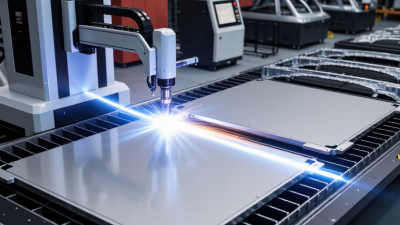
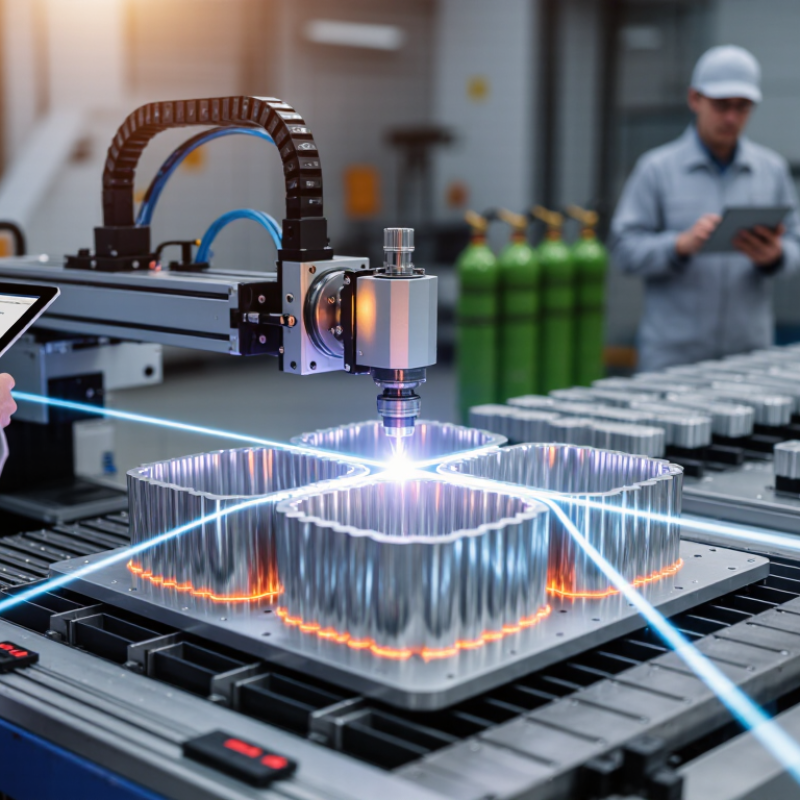
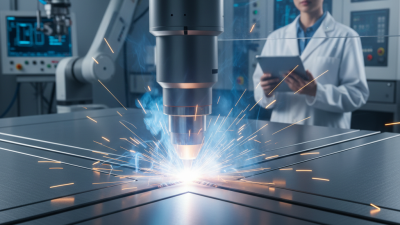
Laser welding joins aluminum by focusing a narrow beam along the seam. The beam heats the joint edges until they melt and form a small pool. As the beam moves, that pool cools into a continuous weld. The process can produce narrow seams with limited distortion, useful for thin panels and precise assemblies. It moves quickly. Aluminum also reflects much of the incoming energy and carries heat away fast, so stable results depend on careful settings and good joint preparation.
A laser can weld aluminum with or without filler metal, depending on the alloy, joint design, and strength requirements. Clean surfaces matter: oil, moisture, and oxide layers can contribute to porosity or inconsistent fusion. Shielding gas, often argon, helps protect the molten metal from contamination. Close-fitting edges also make the process more predictable. Still, there is no universal setting; alloy thickness and equipment affect the result, and excessive heat can cause cracking or burn-through.
Tips: Remove surface residue and check the joint fit before welding. Test settings on a matching scrap piece. Watch for pores, uneven bead shape, or gaps, then adjust the setup rather than assuming the first pass is reliable.
Why Is Laser Welding Aluminum So Popular? — How Laser Welding Joins Aluminum
| Aspect | How It Works | Why It Matters for Aluminum | Practical Consideration |
|---|---|---|---|
| Focused energy | A laser concentrates energy into a small area, melting the adjoining edges to create a fusion joint. | The concentrated heat source can produce a narrow weld and limit the area exposed to high temperatures compared with many broader heat-source processes. | Joint design, material thickness, laser settings, and fit-up all affect weld quality and heat input. |
| Fast, precise processing | When the application and equipment are suitable, a moving laser beam can weld at high travel speeds and follow a controlled path. | This makes the process useful for repeatable production of aluminum parts, including thin sections and complex assemblies. | Speed is not guaranteed: it depends on alloy, thickness, joint geometry, power, and the required weld penetration. |
| Localized heating | The beam delivers heat near the joint rather than heating a large surrounding area. | Reduced surrounding heat exposure can help control distortion, especially on thin components. | Aluminum conducts heat rapidly, so a suitable process window and effective fixturing are important. |
| Conduction and keyhole modes | At lower intensity, the beam forms a shallow melt pool by conduction. At higher intensity, vaporization can create a narrow keyhole for deeper penetration. | These modes allow the weld profile to be matched to different joint and penetration requirements. | Keyhole welding requires stable process control; instability can contribute to porosity or inconsistent penetration. |
| Aluminum’s oxide layer | Aluminum forms a tenacious oxide film. Pure aluminum melts at about 660°C, while aluminum oxide melts at a much higher temperature, around 2,050°C. | The oxide can interfere with consistent fusion if it is present at the joint. | Clean, dry surfaces and appropriate joint preparation are important; laser welding does not eliminate the need for cleanliness. |
| Reflectivity and heat flow | Aluminum reflects a substantial portion of near-infrared laser energy, especially before a stable melt pool forms, and conducts heat quickly. | These properties make process setup more demanding than the phrase “high-energy beam” may suggest. | Laser type, surface condition, beam delivery, and qualified parameter settings should be selected for the specific alloy and part. |
| Shielding and weld integrity | Shielding gas, commonly argon or helium, can protect the molten weld area from atmospheric contamination. | Protection of the weld pool supports sound fusion and helps avoid contamination-related defects. | Gas choice and flow should suit the process; excessive or poorly directed flow can disturb shielding. |
| Automation potential | Laser systems can be integrated with motion controls and programmed paths for repeatable welding. | Automation can improve consistency in high-volume production and reduce reliance on manual torch movement. | Reliable results still depend on accurate part positioning, joint consistency, monitoring, and process qualification. |
| Alloy-specific behavior | Aluminum alloys differ in composition, weldability, and response to thermal cycles. | Some alloys and joint designs are more susceptible to cracking or porosity than others. | Confirm alloy and temper, select an appropriate procedure, and test representative joints before production. |
Note: Laser welding is popular for aluminum because it can combine precise energy delivery, production speed, and automation. Results depend on the alloy, thickness, joint preparation, equipment, and qualified process settings.
Key Advantages Driving Its Popularity
Laser welding is popular for aluminum because it can create narrow, precise seams with less surrounding heat than many conventional processes. That can help limit distortion in thin panels and reduce finishing work. The U.S. Department of Energy notes that a 10% reduction in vehicle weight can improve fuel economy by 6–8%. For manufacturers, joining lightweight aluminum reliably supports that goal. It is not the whole story.
Demand is growing. The International Energy Agency’s Global EV Outlook 2024 reports nearly 14 million electric cars were sold worldwide in 2023, about 18% of all car sales. That expansion increases the need for efficient production of aluminum body structures and battery enclosures. Laser welding can deliver high travel speeds and suit automated lines, while its focused beam helps control heat input. Still, aluminum reflects laser energy and conducts heat quickly. Small gaps, contamination, or unstable settings can cause porosity or weak joints. Fast does not mean effortless.
Tips: Clean the joint, control the gap, and test settings on the actual alloy and thickness. Check the seam for pores and distortion; a shiny surface alone is not proof of a sound weld.
Industries and Applications Using Laser-Welded Aluminum
Automotive plants are a major user of laser-welded aluminum. Battery enclosures, body structures, and crash-management parts need strong joints without unnecessary weight. The Aluminum Association’s 2023 North American Light Vehicle Aluminum Content study, prepared with Ducker Carlisle, reported an average of 514 pounds of aluminum per vehicle in 2022. It projected 556 pounds by 2030. Laser welding can create narrow, precise seams at production speed, but aluminum’s reflective surface and oxide layer make process control essential.
Electric vehicles add another application. The International Energy Agency reported nearly 14 million electric-car sales worldwide in 2023, about 18% of all car sales. Battery trays, motor housings, and cooling plates often use aluminum, where compact, continuous welds can help limit leaks and protect packaging space. Small gaps matter. Poor fit-up can still cause defects, so laser welding is not an automatic shortcut.
Rail vehicles and marine structures also use aluminum to reduce mass, while heat exchangers and electronics housings benefit from accurately joined thin sections. Each application has different demands: a sealed cooling channel needs leak testing, while a structural joint needs strength checks. Laser welding can be productive, but teams must validate the joint design, surface condition, and parameters on representative parts. That work is easy to underestimate.
Factors That Shape Welding Quality and Cost
Laser welding aluminum is popular for thin, lightweight parts, but speed alone does not guarantee a sound joint. Aluminum moves heat quickly, so a narrow beam can lose energy into surrounding material before the weld pool stabilizes. ASM Handbook, Volume 6A, lists thermal conductivity values of roughly 120–230 W/m·K across common wrought aluminum alloys. The exact alloy matters. Small details matter.
Quality depends on alloy, surface condition, fit-up, and beam settings. Oxide films and contamination can destabilize the molten pool; small gaps may cause porosity or incomplete fusion. In practice, clean edges, consistent clamping, and a verified parameter window often matter more than simply increasing laser power. A trial weld should be checked for penetration and defects, not judged by appearance alone.
Cost reflects equipment, preparation, inspection, and rework. Laser systems can reduce heat distortion and limit finishing, but precise fixturing and safety enclosures add upfront expense. Fraunhofer ILT’s laser-processing guidance highlights process control and beam delivery as key factors in repeatable results. That is expensive. Yet one missed fit-up check can erase the savings through scrap and repair. Estimates should include setup time and inspection, not just cycle time.
Related Posts
-
2026 Top Types of Laser Welding Machines for Aluminum?
-
10 Essential Tips for Laser Welding Aluminum Successfully
-
Top 10 Tips for Laser Welding Aluminum Effectively?
-
How to Choose the Best Aluminium Welding Machine for Your Needs?
-
Why Choose a Part Marking Machine for Global Manufacturing?
-
2026 Top Hand Held Welding Machines for Global Buyers