What Is a Laser Welder and Which Type Is Best?
A laser welder uses a concentrated light beam to join metal with remarkable accuracy. Unlike traditional arc welding, it can create narrow welds with limited heat spread. This matters when working on stainless steel frames, jewelry, medical components, or thin automotive panels. The result may look clean and almost polished. However, appearance alone does not prove weld quality.
Choosing the right laser welder depends on material, thickness, joint design, production speed, and operator skill. Fiber laser systems suit many metals, including stainless steel, aluminum, carbon steel, and titanium. They are efficient and often require less maintenance. CO2 systems still have value in specific industrial applications, while pulsed Nd:YAG equipment can handle delicate repairs and fine details. Each option has limits.
The “best” machine is rarely the most powerful one. It is the machine that matches the real task. A small fabrication shop may benefit from a flexible handheld system, while a factory may need automated motion control and consistent beam delivery. Even experienced technicians can misjudge heat input or underestimate setup time. That deserves attention.
Safety remains essential. Proper eye protection, enclosure design, ventilation, training, and manufacturer guidance should shape every purchase. Performance claims also need careful checking through test welds, sample inspection, and documented specifications. This guide compares laser welder types, explains their practical strengths, and highlights where common assumptions can fail. The goal is not to promote one technology, but to support a sound, evidence-based decision.
What Is a Laser Welder and How Does It Work?
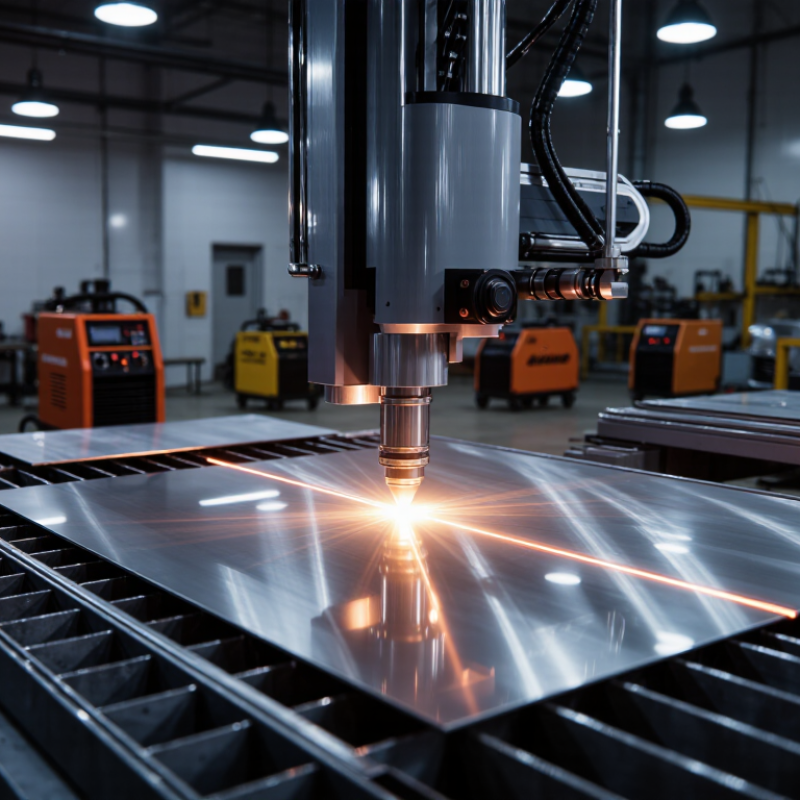
A laser welder joins metal by concentrating light into a tiny, intense heat zone. The beam usually comes from a fiber, diode, or CO2 laser source. Mirrors, lenses, and a focusing head guide that energy onto the joint. Unlike traditional arc welding, the process can create a narrow weld with limited heat spread.
During operation, the focused beam melts the touching edges. As the torch or workpiece moves, the molten metal cools and forms a permanent connection. Shielding gas may protect the hot weld pool from oxygen and nitrogen. Power, travel speed, focus, and material thickness must match carefully. A small setting error can cause porosity, warping, or incomplete fusion. The machine is precise, but it is not automatic perfection.
Tips: Clean both surfaces before welding, even when they look bright. Test settings on scrap metal first. Watch the weld pool, not only the control screen. Fiber lasers suit many common metal jobs because they deliver efficient, concentrated energy. Diode systems can be useful for selected applications, while CO2 systems may require different optics and maintenance. The best type depends on material, thickness, production volume, joint design, and operator skill. Safety remains essential: use the correct enclosure, interlocks, ventilation, and certified protective equipment. Never inspect an active beam directly. Looks simple. It is not.
What Is a Laser Welder and Which Type Is Best? - What Is a Laser Welder and How Does It Work?
| Data Dimension | Key Information | Practical Importance | Typical Applications |
|---|---|---|---|
| Definition | A laser welder is a joining system that uses a focused laser beam to melt and fuse metals or selected thermoplastic materials. | The concentrated heat source can produce precise welds with a relatively small heat-affected zone. | Metal fabrication, electronics, medical components, automotive parts, jewelry, and repair work. |
| How It Works | Laser energy is focused onto the joint, where the material absorbs the light and forms a molten weld pool. As the beam moves, the pool solidifies and creates the joint. | Accurate control of beam position, power, speed, and shielding gas helps control penetration and weld quality. | Butt joints, lap joints, fillet joints, seam welding, and localized repair. |
| Main Welding Modes | Conduction mode uses lower energy density for shallow, smooth welds. Keyhole mode uses higher energy density to create deeper penetration. | The selected mode affects penetration depth, weld width, heat input, and the risk of porosity or spatter. | Surface-sensitive work commonly uses conduction mode, while deeper narrow joints may use keyhole mode. |
| Common Laser Sources | Fiber lasers are efficient and widely used for metal processing. CO₂ lasers operate at a longer wavelength and are used in some industrial systems. Diode lasers are valued for compact designs and surface heating. Pulsed solid-state lasers are suited to very small or heat-sensitive welds. | Laser wavelength, beam quality, efficiency, pulse behavior, and maintenance requirements influence suitability. | Fiber: general metal welding; diode: broad-area heating and lower-power work; pulsed systems: precision and micro-welding. |
| Continuous-Wave Operation | A continuous-wave laser emits energy continuously during the weld cycle rather than in separated pulses. | It is suitable for steady travel speeds, longer seams, and higher production throughput. | Sheet metal, frames, enclosures, pipes, structural components, and automated production lines. |
| Pulsed Operation | A pulsed laser delivers energy in controlled bursts. Pulse duration, repetition rate, and peak power can be adjusted for localized heating. | It limits total heat input and can reduce distortion when welding small, thin, reflective, or heat-sensitive parts. | Fine components, thin sheet, delicate assemblies, mold repair, jewelry, and micro-welding. |
| Typical Power Selection | Lower-power systems are generally used for thin materials and precision work, while higher-power systems are used for thicker sections and faster travel speeds. | Required power depends on material type, thickness, joint design, welding speed, beam focus, and desired penetration. Power alone does not determine performance. | Thin sheet and precision parts may need a few hundred watts, while industrial thick-section work can require several kilowatts. |
| Materials | Laser welding is commonly used with stainless steel, carbon steel, aluminum alloys, copper alloys, nickel alloys, titanium, and selected dissimilar-metal combinations. | Reflectivity, thermal conductivity, melting point, surface condition, and compatibility between materials affect process stability. | Fabricated metal parts, battery components, heat exchangers, precision instruments, and machinery. |
| Shielding Gas | Inert gases such as argon or helium are commonly used to protect the molten pool from atmospheric oxygen and nitrogen. Some applications use nitrogen depending on the material and process. | Proper gas selection and flow can reduce oxidation, discoloration, porosity, and contamination. | Stainless steel, aluminum, titanium, nickel alloys, and visible or corrosion-sensitive welds. |
| Heat-Affected Zone | The heat-affected zone is the area next to the weld that is heated enough to change its microstructure without fully melting. | A focused laser generally produces a narrower heat-affected zone than many conventional arc processes, which can help reduce distortion. | Precision assemblies, thin sheet, dimensionally sensitive parts, and components requiring a clean appearance. |
| Welding Speed | Laser welding can achieve high travel speeds, but the actual speed depends on material, thickness, power, joint fit-up, focus, and required penetration. | Higher speed can improve productivity, but excessive speed may cause incomplete fusion or insufficient penetration. | Long seams, repetitive production, automated cells, and high-volume fabrication. |
| Joint Fit-Up | Laser welding generally requires accurate joint alignment and a relatively small gap because the focused beam has a limited interaction area. | Poor fit-up can lead to lack of fusion, undercut, inconsistent penetration, or the need for filler material. | Precision-machined parts, sheet assemblies, butt joints, and automated manufacturing. |
| Filler Material | Many laser welds can be made autogenously without filler. Filler wire may be added when a gap must be bridged, reinforcement is needed, or metallurgy requires it. | Using filler expands process flexibility but adds wire-feeding and parameter-control requirements. | Visible seams, larger joint gaps, dissimilar materials, repair work, and reinforcement applications. |
| Handheld Laser Welders | A handheld system allows an operator to guide the welding head manually, often with adjustable power, speed, wire feeding, and gas settings. | It offers flexibility and faster setup for varied jobs, but results depend more heavily on operator skill and workholding. | Custom fabrication, low-to-medium production, repair, installation, and varied sheet-metal work. |
| Automated Laser Welders | Automated systems integrate motion stages, robots, fixtures, sensors, and programmable welding parameters. | Automation improves repeatability, traceability, production consistency, and operator separation from the process. | High-volume manufacturing, precision assemblies, battery production, and robotic production cells. |
| Advantages | High precision, narrow heat input, low distortion potential, fast processing, clean weld appearance, and compatibility with automation. | These advantages can reduce secondary finishing and improve dimensional consistency when the process is correctly designed. | Precision manufacturing and applications where appearance, speed, or low thermal impact is important. |
| Limitations | Higher initial equipment cost, sensitivity to joint fit-up, need for suitable laser safety controls, reflective-material challenges, and process-development requirements. | A laser welder is not automatically the best choice for every thickness, material, joint geometry, or production volume. | Applications with large gaps, severe contamination, difficult access, or low-cost occasional welding may require other processes. |
| Safety Requirements | Class 4 laser welding systems require controlled access, suitable laser-rated enclosures or barriers, wavelength-appropriate eyewear, interlocks, beam controls, ventilation, and trained operators. | Laser radiation, reflected beams, fumes, hot metal, electrical energy, and fire hazards must all be addressed through a documented safety program. | All industrial, workshop, laboratory, and maintenance environments using exposed or enclosed laser systems. |
| Best Type for Precision Work | A pulsed laser system or a finely controlled low-power fiber or solid-state system is often suitable for small, thin, or heat-sensitive components. | Short, controlled energy delivery helps limit distortion and protect nearby features. | Electronics, medical parts, fine mechanisms, small stainless-steel components, and delicate repairs. |
| Best Type for General Metal Fabrication | A continuous-wave fiber laser system is commonly selected for versatile welding of steel, stainless steel, and aluminum sheet and components. | It provides a useful balance of efficiency, speed, beam quality, and process flexibility for many metalworking tasks. | Frames, cabinets, furniture, machinery, automotive components, and sheet-metal fabrication. |
| Best Type for High-Volume Production | An automated continuous-wave system with robotic or CNC motion, suitable fixturing, monitoring, and controlled gas delivery is generally preferred. | Automation supports repeatable weld geometry, predictable cycle times, and integration with inspection and production tracking. | Automotive parts, appliances, batteries, industrial equipment, and large-scale component manufacturing. |
| Selection Criteria | Evaluate material and thickness, joint design, required penetration, weld length, production volume, allowable distortion, fit-up tolerance, automation needs, safety infrastructure, and total operating cost. | The best laser welder is determined by the complete application rather than by rated power or purchase price alone. | Process trials and sample testing are recommended before final equipment selection. |
Related Posts
-
Unveiling the Future: How Laser Welders Revolutionize Modern Manufacturing Techniques
-

Laser Beam Welding Tips for Global Buyers to Boost Efficiency?
-
How to Choose the Best Laser Welder for Your Needs?
-
2026 Top Hand Held Welding Machines for Global Buyers
-
How to Choose a Hand Laser Welding Machine in 2026?
-
Top 10 Benefits of Handheld Laser Welding Machines for Modern Manufacturing?