What Is Gas Tungsten Arc Welding and How Does It Work?

Gas tungsten arc welding, commonly called TIG welding, creates an arc between a nonconsumable tungsten electrode and the workpiece. Shielding gas, usually argon, protects the molten pool from atmospheric contamination. The welder may add a separate filler rod, or fuse the joint without filler. This control produces narrow, clean welds with little spatter, especially on stainless steel, aluminum, titanium, and thin sheet.

The process looks calm at the torch, but it demands discipline. A steady hand controls arc length, travel speed, heat input, and filler placement. Even a brief touch between tungsten and molten metal can contaminate the electrode. John C. Lippold, a respected welding engineer and professor, defines weldability as “the capacity of a material to be welded under the fabrication conditions imposed.” That reminder matters: a beautiful bead does not automatically prove a reliable joint.

Industry demand also supports strong technical training. The U.S. Bureau of Labor Statistics projects about 42,600 annual openings for welders, cutters, solderers, and brazers from 2023 through 2033. Many roles involve interpreting procedures, checking gas flow, and verifying weld quality. Reports from the American Welding Society also emphasize workforce development and qualification needs across modern fabrication sectors. GTAW rewards patience, not speed. A bright arc can hide poor penetration. This guide explains the equipment, arc behavior, joint preparation, essential settings, and common mistakes behind gas tungsten arc welding. It also examines where the process becomes inefficient, because precision has a cost.
What Is Gas Tungsten Arc Welding and How Does It Work?

What Is Gas Tungsten Arc Welding (GTAW)?

Gas Tungsten Arc Welding, or GTAW, is an arc welding process that uses a nonconsumable tungsten electrode. The electrode creates the arc between itself and the metal workpiece. This arc generates intense heat and melts the joint area. A separate shielding gas protects the hot weld pool from oxygen and nitrogen in the air. Without that protection, the weld may become weak or contaminated.

GTAW is often called TIG welding. It can use filler metal, but filler is not always necessary. An operator may feed a thin rod by hand while controlling the torch with the other hand. This demands steady movement and close attention. The weld pool should look small, bright, and controlled. Too much heat can burn through thin sheet metal. Too little heat can leave poor fusion. This balance is difficult at first.

The process works with many metals, including stainless steel, aluminum, and mild steel. Alternating current is commonly used for aluminum, while direct current suits many steel applications. Clean surfaces matter greatly. Oil, rust, paint, or moisture can disturb the arc and create defects. Even experienced welders inspect their settings and technique carefully. A perfect-looking bead does not always prove a sound joint. Proper training, ventilation, eye protection, and electrical safety remain essential. That practical caution is easy to underestimate.

How Does the GTAW Process Create and Control an Arc?

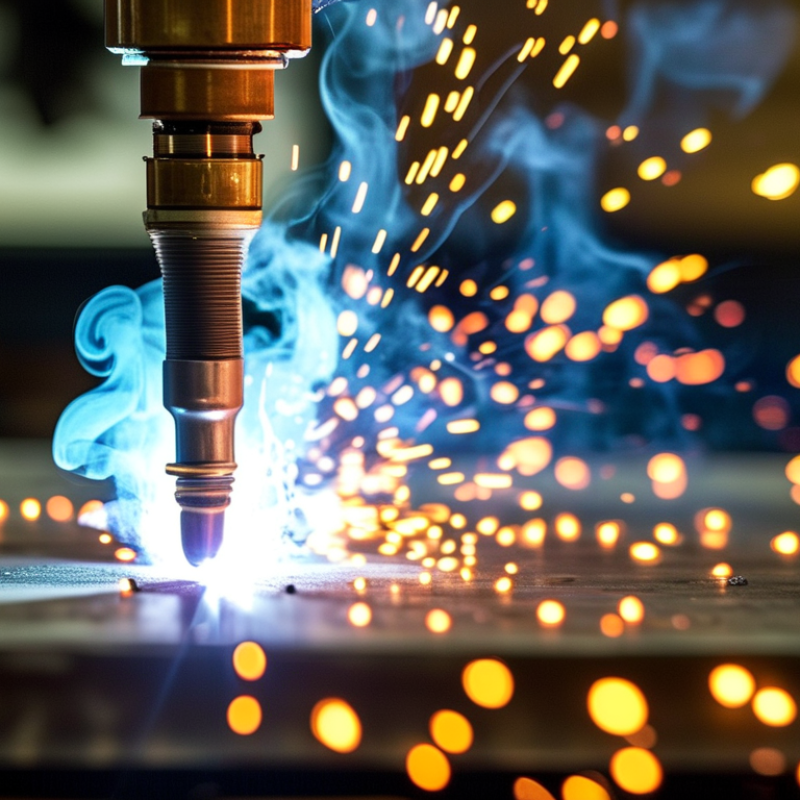
Gas Tungsten Arc Welding, or GTAW, creates a controlled arc between a non-consumable tungsten electrode and the workpiece. The arc’s heat melts the joint edges, while an inert shielding gas protects the hot metal from oxygen and nitrogen. Without that protection, the weld can become porous or discolored. In practice, a clean tungsten tip and stable work clamp matter more than many beginners expect.

Arc control begins with the power source. Direct current with a negative tungsten electrode often provides a focused, steady arc for steel and stainless steel. Alternating current helps manage oxide layers on aluminum. The welder adjusts amperage, arc length, and travel speed while watching the molten puddle. A foot control can fine-tune heat when joint thickness changes. Too long an arc spreads heat and weakens control. Too short can contaminate the electrode. Even experienced welders sometimes misread a shiny puddle, so pausing to reassess the sound and bead shape is worthwhile.

Tips: Keep the tungsten sharply prepared and centered over the joint. Hold the torch at a consistent angle, usually near 15 degrees from vertical. Add filler metal at the puddle’s leading edge, not directly into the arc. Clean the joint thoroughly before striking. Practice on scrap with the same thickness and position. Small mistakes reveal useful information, although I still find inconsistent travel speed difficult on awkward joints. Record current, gas flow, and electrode size after each test, then adjust only one setting at a time.

What Is Gas Tungsten Arc Welding and How Does It Work?

How Does the GTAW Process Create and Control an Arc?

GTAW creates an electric arc between a non-consumable tungsten electrode and the workpiece. The arc generates heat for melting the joint, while shielding gas protects the molten weld pool from atmospheric contamination. This representative pulsed-current profile uses a 160 A peak current and a 60 A background current at 2 Hz. Increasing current generally increases arc heat input, while the background current helps maintain the arc between pulses and control the weld pool.

What Equipment and Materials Does GTAW Require?

Gas Tungsten Arc Welding needs a controlled electrical system, clean shielding gas, and careful hand control. The essential equipment includes a constant-current power source, GTAW torch, ground clamp, gas regulator, flowmeter, and a foot pedal or fingertip control. A water cooler may be necessary for high-amperage work. For most stainless steel and aluminum joints, argon is a practical shielding gas. A typical flow range is 10–20 L/min, consistent with guidance in the AWS Welding Handbook.

The electrode must be nonconsumable tungsten. ISO 6848 classifies tungsten electrodes by composition and performance, while AWS A5.12/A5.12M covers electrode requirements. Select the diameter according to current, joint design, and polarity. Filler rods should match the base metal; AWS A5.18 covers carbon-steel filler metals, while other specifications address stainless steel and aluminum alloys. Keep rods dry, clean, and stored away from grinding dust.

Personal protection remains part of the equipment list. Use a correctly shaded helmet, flame-resistant clothing, gloves, hearing protection, and local exhaust ventilation. OSHA’s welding standard stresses ventilation and control of fumes and gases. In practice, I check gas leaks before every weld and inspect the tungsten tip after contamination. One weakness in many setups is poor cable placement. It can disturb torch movement. I once blamed unstable current when the real problem was an almost empty gas cylinder. That mistake still influences my checklist.

How Is a Gas Tungsten Arc Weld Made Step by Step?

Gas tungsten arc welding, or GTAW, uses a non-consumable tungsten electrode and a shielding gas, usually argon. ISO 4063 identifies it as process 141. The weld begins with preparation, not the arc. Remove oil, paint, and oxide from the joint. Fit the parts tightly, then clamp them securely. A small gap can change penetration quickly.

Set the machine for the metal thickness and polarity. For many steels, direct current electrode negative is typical. Choose a clean tungsten, sharpen its tip, and set argon flow according to the torch and cup. A practical starting range is often 8–15 liters per minute. Test the gas before welding. Press the torch switch, establish a short arc, and keep the tungsten close without touching the pool. Feed filler rod at the front edge, using small, steady additions. Move slowly enough to form a bright, controlled puddle.

After finishing the joint, keep shielding gas flowing during post-flow. This protects the hot tungsten and weld surface from oxidation. Let the metal cool naturally, then inspect the bead for pores, undercut, and uneven width. NIOSH lists a recommended exposure limit of 0.2 micrograms per cubic meter for hexavalent chromium, relevant when welding stainless steel. Ventilation remains essential. BLS reported a median annual wage of 48,940 dollars for welders, cutters, solderers, and brazers in May 2023, but training quality still varies. My own practical caution is simple: a neat bead can hide weak fusion. Cut and examine sample welds when accuracy matters.

What Is Gas Tungsten Arc Welding and How Does It Work? — How Is a Gas Tungsten Arc Weld Made Step by Step?
Step Process Dimension What Happens Typical Data or Guidance
1 Welding Method Gas Tungsten Arc Welding (GTAW), commonly called TIG welding, creates an electric arc between a nonconsumable tungsten electrode and the workpiece. The arc melts the base metal, while a separate filler rod may be added when required. A precise, low-spatter process suitable for thin sections, root passes, visible welds, and heat-sensitive components.
2 Joint Preparation Clean the joint and remove oil, paint, oxides, moisture, and other contaminants. Fit and tack the parts so the joint remains aligned during welding. Joint cleanliness is especially important for aluminum, stainless steel, and reactive metals.
3 Power Source Selection Select a constant-current power source. Direct current electrode negative is commonly used for steels, stainless steels, copper, and nickel alloys. Alternating current is generally used for aluminum and magnesium to help remove surface oxides. DCEN: common for steels and nickel alloys. AC: common for aluminum and magnesium.
4 Shielding Gas Setup Connect the shielding-gas cylinder to the regulator and flowmeter. The gas flows through the torch nozzle to protect the molten pool and tungsten from atmospheric contamination. High-purity argon is widely used. Helium or argon-helium mixtures can provide additional heat input.
5 Gas Flow Set the gas flow high enough to provide stable coverage without creating excessive turbulence. Excessive flow can draw air into the shielding zone. Approximately 7–14 L/min of argon is common, depending on nozzle size, joint design, and working conditions.
6 Tungsten Electrode Install and prepare the tungsten electrode. For DC welding, a pointed or truncated-point tip is commonly used. For AC welding, the tip preparation depends on the power source and waveform. Common electrode diameters include approximately 1.6 mm, 2.4 mm, and 3.2 mm.
7 Amperage Setting Set the welding current according to the material type, thickness, joint configuration, electrode size, and welding position. Too much current can cause burn-through or excessive distortion. Thin sheet metal may require tens of amperes; thicker sections may require well over 100 A.
8 Arc Starting Start the arc using high-frequency or lift-arc ignition. Avoid striking the tungsten directly against the workpiece because contamination can destabilize the arc. Maintain a short, consistent arc length, commonly about 1–3 mm for many manual welds.
9 Torch Angle and Travel Hold the torch steadily and move it at a controlled speed. A slight travel angle helps direct the shielding gas over the weld pool without pushing it away. A travel angle of roughly 10–15 degrees from vertical is commonly used in manual welding.
10 Filler Metal Addition When filler is needed, dip the end of the filler rod into the leading edge of the molten pool without touching the tungsten electrode. Feed the rod smoothly and consistently. Filler diameter is selected according to joint gap, material thickness, and required weld size.
11 Weld Pool Control Observe the pool size, edge fusion, penetration, and surface appearance. Adjust travel speed, current, or filler addition to maintain a uniform bead. A stable pool and consistent bead width generally indicate controlled heat input.
12 Arc Termination Reduce current gradually when possible and keep the torch over the weld area until the post-flow cycle ends. This helps prevent crater cracking and protects the hot tungsten and weld metal. Post-flow shielding commonly continues for several seconds, depending on electrode size and current.
13 Weld Inspection Inspect the weld for cracks, porosity, undercut, lack of fusion, excessive reinforcement, discoloration, and incomplete penetration. Use additional non-destructive testing when required by the application. Visual inspection is the first check; dye penetrant, radiographic, ultrasonic, or other tests may be specified.
14 Key Advantages GTAW provides excellent control, clean welds, low spatter, and high-quality results on many metals. It is also well suited to thin materials and applications requiring an attractive weld appearance. Common applications include stainless steel tubing, aerospace components, pressure equipment, precision fabrication, and pipe root passes.
15 Main Limitations The process is relatively slow, requires significant operator coordination, and is sensitive to drafts, surface contamination, and poor shielding. It also produces limited deposition compared with many wire-fed processes. Best suited to quality-focused work where precision is more important than maximum deposition rate.
16 Essential Safety Measures Wear a properly rated welding helmet, flame-resistant clothing, welding gloves, safety footwear, and eye protection. Use adequate ventilation and secure gas cylinders. Protect nearby personnel from ultraviolet radiation and hot metal. Follow applicable workplace safety regulations and the operating instructions for the welding equipment.
Note: Actual welding parameters must be confirmed through a qualified welding procedure, material specifications, joint design, and a controlled test weld.

Where Is GTAW Used, and What Are Its Main Benefits and Limits?

Gas Tungsten Arc Welding, or GTAW, is used where weld quality matters more than speed. It creates an arc between a non-consumable tungsten electrode and the workpiece. An inert shielding gas protects the molten pool from oxygen and nitrogen. Operators may add filler metal by hand. The result is a narrow, controlled bead with little spatter.

GTAW is common in aerospace structures, pharmaceutical piping, food-processing equipment, nuclear components, and thin stainless-steel assemblies. It also suits aluminum, nickel alloys, titanium, and copper.

The American Welding Society’s workforce report estimates that the United States may need about 330,000 welding professionals by 2028. That demand reflects many welding processes, not GTAW alone. Still, it shows why accurate process training remains important.

Its main benefits are clean appearance, strong control, and excellent root quality. A skilled operator can weld thin sheet without excessive distortion. However, GTAW is slow and demands steady hand coordination. Contaminated tungsten can quickly spoil the weld. Drafts, poor gas coverage, or a dirty joint may cause hidden porosity.

The U.S. Bureau of Labor Statistics projects about 47,600 annual openings for welders and related workers through 2033. That figure is encouraging, but GTAW skills require patience beyond basic employment training. In production, its precision can become a weakness when output targets dominate. Sometimes, a simpler process is the more practical choice.