How to Choose the Best Aluminium Welding Technique for Your Needs?
Choosing the right aluminium welding technique is critical for achieving optimal results. Expert welder Sarah Mitchell states, “The best welding technique depends on the specific application and materials you’re using.” This highlights the importance of aligning your needs with the right method.
Aluminium welding is not just a skill; it’s an art. It requires an understanding of the properties of aluminium and the challenges associated with it. Factors like thickness, alloy type, and joint design come into play, impacting your choice. Many beginners make common mistakes, often overlooking these aspects, leading to poor weld quality.
Exploring various techniques such as MIG, TIG, orStick welding can be overwhelming. Each has its advantages and disadvantages. For instance, TIG welding offers precision but requires more skill. Meanwhile, MIG welding can be easier for enthusiasts and beginners. Careful consideration of your project requirements is essential to ensure success in aluminium welding.
Understanding Aluminium Welding: Key Characteristics and Properties
Aluminium welding requires a solid understanding of its unique properties. Aluminium is lightweight but strong. It conducts heat well and can corrode over time. Knowing these characteristics is crucial for selecting the right welding technique. The heat conductivity can lead to warping if not controlled properly. Therefore, understanding the thermal properties of aluminium is vital for effective welding.
Different welding techniques offer various advantages. MIG welding is efficient and can work on thicker materials. It provides a strong bond but may require additional cleanup. TIG welding offers precision, suitable for thinner sections. However, it demands a high skill level and is slower. This aspect can be a challenge for beginners.
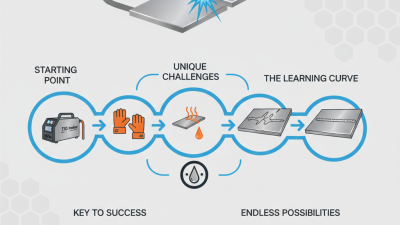
Reflecting on your specific needs will help find the best technique. Whether focusing on speed, strength, or precision, each method carries its trade-offs. Engaging in hands-on practice can reveal strengths and weaknesses in each approach. Understanding more about aluminium can elevate your welding quality, making the learning curve a worthwhile investment.
Common Aluminium Welding Techniques: Overview and Applications
When it comes to aluminium welding, various techniques cater to specific needs. MIG welding, or Metal Inert Gas welding, is popular for its speed and simplicity. It excels in thin materials and is suitable for both beginners and experienced welders. This method uses a continuous wire feed, making it efficient for larger projects. However, quality may diminish in outdoor settings due to wind exposure.
TIG welding, or Tungsten Inert Gas welding, offers greater precision and control. It's ideal for delicate tasks, producing strong, clean welds. TIG requires skilled hands, often becoming a challenging process for novices. The versatility allows it to work on different aluminium alloys. Yet, the slow speed may not suit time-sensitive projects.
Stick welding, or Shielded Metal Arc welding, is another option. It can be effective outdoors and in adverse conditions. However, the finished weld may need additional cleaning or grinding. Each technique has pros and cons, often leaving welders choosing based on their environment and project requirements. Assessing these factors is crucial for achieving optimal results.
Factors to Consider When Choosing a Welding Technique
When selecting an aluminium welding technique, there are several crucial factors to consider. The type of aluminium alloy you are working with significantly impacts your choice. Different alloys have varying properties and require specific techniques. For example, thin sheets often need a more delicate approach, such as TIG welding, while thicker materials may be suited for MIG welding. Understanding these differences is essential for achieving strong, clean welds.
Another important factor is the environment in which you will be welding. Outdoor settings may introduce wind or rain, affecting techniques like MIG welding that rely on gas shielding. If you are working in a confined space, then the portability of your equipment becomes essential. Assessing your workspace will guide you toward the best welding technique for your needs.
Skills and experience also play a critical role. If you are new to welding, you might find some techniques more challenging to master. Taking into account your current skill level can help you choose an appropriate method. Sometimes, it's tempting to go for advanced techniques, but sticking to basics often yields better results for beginners. Choose wisely, and keep refining your approach as you learn.
Comparing Cost and Efficiency of Different Aluminium Welding Methods
Selecting the right aluminium welding technique can be daunting. Each method carries its own cost and efficiency profile. MIG and TIG welding are popular choices, but they serve different purposes and project requirements. MIG welding is usually more cost-effective for thicker materials. It offers speedy results, making it ideal for larger projects.
On the other hand, TIG welding provides superior precision. It's great for thinner materials but comes with a higher price tag. This method requires more skill, which can affect overall project costs. If your project demands intricate designs, the investment in TIG may pay off. However, the learning curve might be steep for those new to welding.
When considering welding methods, keep in mind the long-term implications of your choice. Initial costs might tempt you toward cheaper options. However, if you skimp on quality, it could lead to more expenses later. Reflect on your project needs and the skills available to you. Proper evaluation will ensure that the method chosen aligns with both budget and efficiency requirements.
Safety Precautions and Best Practices in Aluminium Welding
Safety is paramount in aluminium welding. This process can expose welders to hazardous fumes and intense heat. According to the American National Standards Institute (ANSI), nearly 50% of welding-related injuries result from poor safety practices. To minimize risks, proper ventilation in the workspace is essential. This helps to disperse harmful particles and gases released during welding. Employing local exhaust ventilation can greatly reduce exposure to toxic fumes.
PPE (personal protective equipment) is non-negotiable. Welders should wear flame-resistant clothing and proper helmets with appropriate shading to protect their eyes. The National Institute for Occupational Safety and Health (NIOSH) recommends using gloves that offer dexterity and heat resistance. Regular maintenance of equipment also plays a crucial role in ensuring safety. Worn tools can lead to accidents and poor-quality welds.
Mindfulness in welding techniques is important. For instance, a novice might think that higher heat leads to better penetration. However, excessive heat can cause warping or burn-through, leading to costly repairs. Continuous training and knowledge-sharing within teams can help reduce such mistakes. Accurate assessments of each project’s requirements contribute to a safer and more effective welding environment.