China Best Fiber Laser Welding Machine Manufacturers
Choosing among China’s best fiber laser welding machine manufacturers requires more than comparing advertised power. A reliable supplier should demonstrate stable beam delivery, accurate motion control, and consistent weld quality. In practical workshops, operators notice these differences on thin stainless-steel panels, aluminum frames, and small corner joints. Clean seams matter. So do downtime, training, and service response. This introduction examines manufacturers through those working realities, not marketing language alone.
Experienced buyers usually inspect factory capabilities, component sources, testing procedures, and after-sales support. They may request sample welds using the same material, thickness, and joint design used in production. A serious manufacturer can explain laser source selection, cooling requirements, handheld safety controls, and consumable availability. Certifications and export experience add confidence, but they should be verified against current documents. A polished website is not enough. That point is easy to overlook.
The phrase “best” remains subjective because a job shop and an automotive supplier need different systems. This guide compares Chinese manufacturers by engineering depth, machine reliability, customization, operator usability, and total ownership cost. It also considers installation guidance, warranty clarity, and response times after delivery. Some evaluations may remain imperfect without long-term factory data. Readers should therefore confirm specifications, test results, and local compliance before purchasing. The goal is a practical shortlist, built on evidence and careful questions.
Fiber Laser Welding in China: Principles, Types, and Key Performance Metrics
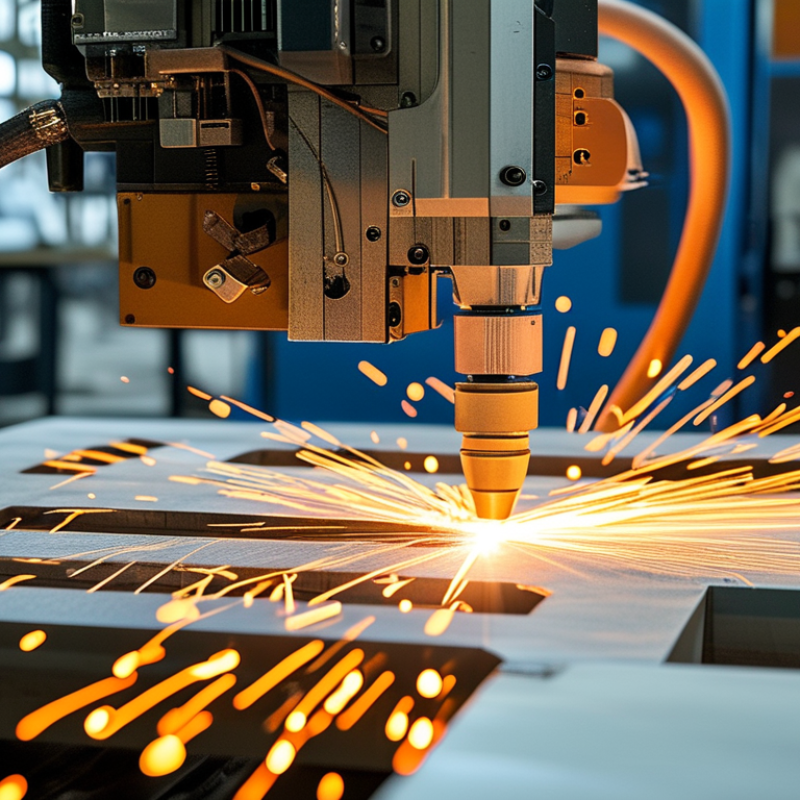
Fiber laser welding converts electrical energy into a concentrated light beam through optical fiber. The beam melts a small joint area, creating conduction or keyhole welding. High power density enables narrow heat-affected zones and limited distortion. MarketsandMarkets’ 2024 fiber laser report projects strong market growth through 2029, supported by automotive, electronics, and metal fabrication demand.
Chinese manufacturers commonly supply handheld, robotic, gantry, and galvanometer welding systems. Handheld units suit repair work and short production runs. Robotic cells provide repeatable paths for larger batches. Galvanometer scanners deliver fast movement over wider work areas. The choice depends on joint design, material thickness, and operator skill. A neat specification sheet can still mislead.
Critical metrics include laser power, welding speed, spot diameter, beam quality, penetration depth, and electrical efficiency. For example, 1,000–2,000 watts may handle many thin and medium metal assemblies, but joint fit remains decisive. Poor gaps waste power. ISO 3834 emphasizes controlled welding quality, while IEC 60825-1 defines laser safety requirements. Buyers should request destructive test results, seam photographs, and repeatability data. Chinese production strength is significant, yet quality varies between integrators. Verification matters more than impressive numbers.
China’s Leading Manufacturers: Production Scale, Certifications, and R&D Strength
China Best Fiber Laser Welding Machine Manufacturers
China’s leading fiber laser welding manufacturers increasingly combine large-scale production with documented process control. The International Federation of Robotics reported 276,288 industrial robot installations in China during 2023, representing 51% of global installations. This industrial base supports automated welding cells, precision motion systems, and faster equipment commissioning. However, factory size alone can mislead. Buyers should inspect production records, calibration routines, and real weld samples.
Reliable manufacturers commonly operate under ISO 9001 quality management systems, while ISO 14001 and ISO 45001 indicate broader environmental and workplace controls. Laser equipment should also address IEC 60825-1 safety requirements and applicable Chinese national standards. Certification matters. Yet a certificate cannot replace traceability. Ask whether each laser source, protective enclosure, and control component receives recorded inspection before shipment.
Research strength appears in beam delivery design, adaptive power control, thermal monitoring, and software integration. China’s strong automation demand, reflected in the 2024 World Robotics report, encourages practical R&D rather than laboratory features alone. Look for test benches, application engineers, and published welding parameters for stainless steel, aluminum, and dissimilar metals. Some suppliers still present patent counts without proving field performance. That weakness deserves scrutiny. A short factory audit, sample weld review, and repeatability test can reveal more than polished brochures.
How to Compare Laser Power, Welding Speed, Beam Quality, and Efficiency
China Best Fiber Laser Welding Machine Manufacturers
When comparing fiber laser welding machines, laser power is only the starting point. A 1,500-watt source may weld 2 mm stainless steel quickly, but excessive power can widen the heat-affected zone. Test the actual material, thickness, joint design, and shielding gas before accepting a supplier’s rating. Power matters most when matched with stable energy delivery.
Welding speed should be measured on production samples, not showroom demonstrations. Record travel speed, penetration depth, spatter, and rework during repeated passes. Beam quality also deserves close attention. A low M² value usually supports a smaller, more concentrated spot, producing cleaner seams and better control on thin sheet. However, perfect beam specifications cannot repair poor focusing or unsteady hand movement. Small details matter.
Efficiency includes more than electrical consumption. Check wall-plug efficiency, cooling demand, duty cycle, maintenance time, and usable operating hours. A machine that welds at 80 millimeters per second may waste money if frequent calibration interrupts production. Ask for test reports, maintenance records, and measurable results from material similar to yours. I have seen comparisons favor the fastest machine, then change after three months of real factory use. That mistake is easy to repeat. Worker training, fixture accuracy, and gas stability can influence output as much as laser power. Measure them together.
China Best Fiber Laser Welding Machine Manufacturers - How to Compare Laser Power, Welding Speed, Beam Quality, and Efficiency
| Comparison Dimension | Entry-Level Configuration | General-Purpose Configuration | High-Productivity Configuration | How to Evaluate |
|---|---|---|---|---|
| Typical fiber laser power | 1,000 W | 1,500–2,000 W | 3,000–6,000 W | Select power according to material, joint design, thickness, and required penetration rather than power alone. |
| Recommended material thickness range | Approximately 0.5–3 mm | Approximately 0.8–5 mm | Approximately 1–10 mm | Actual capacity varies with steel grade, aluminum reflectivity, joint fit-up, shielding gas, and welding position. |
| Typical welding speed for thin carbon steel | Up to about 20–40 mm/s | About 25–60 mm/s | About 30–80 mm/s | Compare speed at the same thickness, joint type, bead size, laser power, wire-feed rate, and quality standard. |
| Typical welding speed for stainless steel | About 15–35 mm/s | About 20–55 mm/s | About 25–70 mm/s | Higher speed is useful only when penetration, appearance, porosity, and distortion remain within specification. |
| Beam quality, M² | Typically 1.2–1.5 | Typically 1.2–1.8 | Typically 1.3–2.5 | A lower M² value generally indicates better focusability. Request measured data at the stated power and delivery-fiber core size. |
| Typical focused spot diameter | Approximately 0.10–0.30 mm | Approximately 0.15–0.40 mm | Approximately 0.20–0.60 mm | Spot size depends on the optical head, focal length, beam parameter product, and processing distance. |
| Electrical-to-optical efficiency of laser source | Typically 25–35% | Typically 30–40% | Typically 30–40% | Verify whether the quoted figure applies to the laser source only or to the complete welding system. |
| Approximate total electrical input | About 4–8 kW | About 6–12 kW | About 12–25 kW | Includes the laser, chiller, control system, wire feeder, motion equipment, and ventilation where applicable; actual demand depends on duty cycle. |
| Duty cycle suitability | Low to medium production | Medium to high production | High-volume production | Check continuous operating time, thermal stability, cooling capacity, and manufacturer-rated availability. |
| Heat input and distortion control | Good for thin parts | Very good for mixed thicknesses | Good when parameters are optimized | Laser welding generally concentrates heat in a smaller zone than conventional arc welding, but excessive power or slow travel can still increase distortion. |
| Shielding-gas requirement | Argon or nitrogen, commonly 10–20 L/min | Argon or nitrogen, commonly 12–25 L/min | Argon, nitrogen, or helium blends as required | Gas flow depends on nozzle design, material, joint geometry, travel speed, and ambient conditions. Excessive flow can create turbulence. |
| Recommended operating profile | Prototype work, repair, small batches | Fabrication, enclosures, appliances, general components | Automotive parts, heavy fabrication, continuous production | Choose the configuration that meets the required throughput without paying for unused power or oversized utilities. |
| Key acceptance test | Sample weld and visual inspection | Cross-section, tensile test, and repeatability test | Production-rate trial, statistical quality data, and energy-per-part measurement | Request test results using your actual material, thickness, joint design, filler wire, shielding gas, and quality requirements. |
Note: The figures are representative engineering ranges for commonly used fiber laser welding configurations. Final performance depends on material, joint geometry, optical setup, process parameters, operator skill, and production conditions.
Industrial Applications: Automotive, Electronics, Aerospace, and Energy Storage
Fiber laser welding machines are becoming essential tools across demanding industrial applications. In automotive production, they join battery trays, body panels, motor housings, and transmission components. A focused laser creates narrow welds with limited heat distortion. This helps maintain tight tolerances on thin stainless steel and aluminum parts.
Electronics factories use these systems for connectors, sensor housings, and delicate copper tabs. Precise power control reduces burn-through and protects nearby components. In aerospace manufacturing, stable beam delivery supports repeatable welding of lightweight alloys and structural assemblies. Operators still need careful parameter testing, especially when material thickness changes. Small errors matter.
Energy storage production creates another demanding environment. Laser welding can seal battery enclosures and connect busbars with consistent speed. Clean surfaces, controlled shielding gas, and accurate fixturing remain critical. A strong manufacturer should provide practical process trials, traceable quality checks, and responsive technical support. Specifications alone are not enough.
The first trial is rarely perfect. Porosity, spatter, or uneven penetration may appear after production starts. That weakness deserves attention, not excuses. Experienced suppliers help adjust laser power, travel speed, focus position, and clamping pressure. They should also explain maintenance intervals and operator training clearly. These details often determine whether a machine performs reliably beside a busy production line.
China Fiber Laser Welding Machine Applications
Typical fiber laser source-power ranges used in industrial welding. Automotive applications generally require higher power for body, chassis, and structural components, while electronics applications typically use lower power for precision joining.
The ranges represent common production practices rather than company-specific specifications. Actual laser power depends on material, thickness, joint design, welding speed, and required penetration.
Buyer’s Guide: Standards, After-Sales Service, Pricing, and Total Ownership Cost
China Best Fiber Laser Welding Machine Manufacturers
Choosing a fiber laser welding machine requires more than comparing purchase prices. A dependable manufacturer should provide documented compliance with applicable laser safety, electrical safety, and machinery standards. Ask for test reports, quality certificates, and a clear welding parameter range. ISO 9001 certification can indicate controlled production, but it does not guarantee every machine will fit your process. Request sample welds using your actual material, thickness, and joint design.
After-sales service often decides whether a machine earns money or sits unused. Confirm installation support, operator training, spare-parts availability, and remote diagnosis procedures. Ask how quickly engineers respond during holidays. A serious supplier should explain warranty exclusions in plain language. Some buyers overlook software updates, lens replacement, cooling-system maintenance, and fume extraction. These expenses are small individually. Together, they can reshape the budget.
The lowest quote may be misleading. Compare laser source power, welding head quality, automation features, shipping, installation, training, and local taxes. Calculate total ownership cost over five years, including electricity, protective lenses, shielding gas, consumables, downtime, and technician travel. A higher initial price may reduce production interruptions. Still, expensive equipment is not automatically better. I would challenge every unclear claim, especially promised speed and penetration. A factory visit or independent trial can reveal practical weaknesses that brochures hide. Part of the decision remains uncertain, and buyers should record those assumptions before signing.
Related Posts
-
Exploring the Future: How Handheld Laser Welders Are Revolutionizing DIY Projects
-
Unveiling the Future: How Laser Welders Revolutionize Modern Manufacturing Techniques
-
Top Hand Held Laser Welders for 2026 What to Consider?
-
How to Choose the Best Laser Welder for Your Needs?
-
Top 10 Benefits of Handheld Laser Welding Machines for Modern Manufacturing?
-
Top 10 Handheld Laser Welding Machines for Efficient Metal Joining