What Is Aluminium Welding and How Does It Work?
Aluminium welding joins aluminium parts by melting their edges or adding a compatible filler metal. The process creates strong connections for vehicles, boats, construction frames, and industrial equipment. Unlike steel, aluminium conducts heat quickly and develops an oxide layer almost immediately. That difference makes the work demanding.
Most aluminium welding uses Gas Tungsten Arc Welding or Gas Metal Arc Welding. TIG welding offers precise control for thin sheets and visible joints. MIG welding works faster on thicker materials and larger production runs. In both methods, an electric arc produces heat, while shielding gas protects the molten pool from atmospheric contamination. Argon is commonly used. Clean preparation remains essential.
A welder usually removes grease, dirt, and oxide before striking the arc. A stainless-steel brush reserved for aluminium can help expose a cleaner surface. The operator then balances amperage, travel speed, torch angle, and filler selection. Small changes matter. Too much heat can distort a panel or weaken the joint. Too little heat may create poor fusion.
The theory sounds straightforward. Practice is not.
Experienced welders still inspect bead shape, penetration, porosity, and discoloration. They may adjust settings after observing the first few centimeters of weld. This practical feedback is important because alloy type, thickness, joint design, and equipment all affect results. Aluminium welding is therefore both a technical process and a disciplined skill. Reliable outcomes depend on proper training, suitable ventilation, protective equipment, and inspection procedures. No single setting works everywhere, and that limitation deserves honest attention.
What Is Aluminium Welding and Why Is It Used?
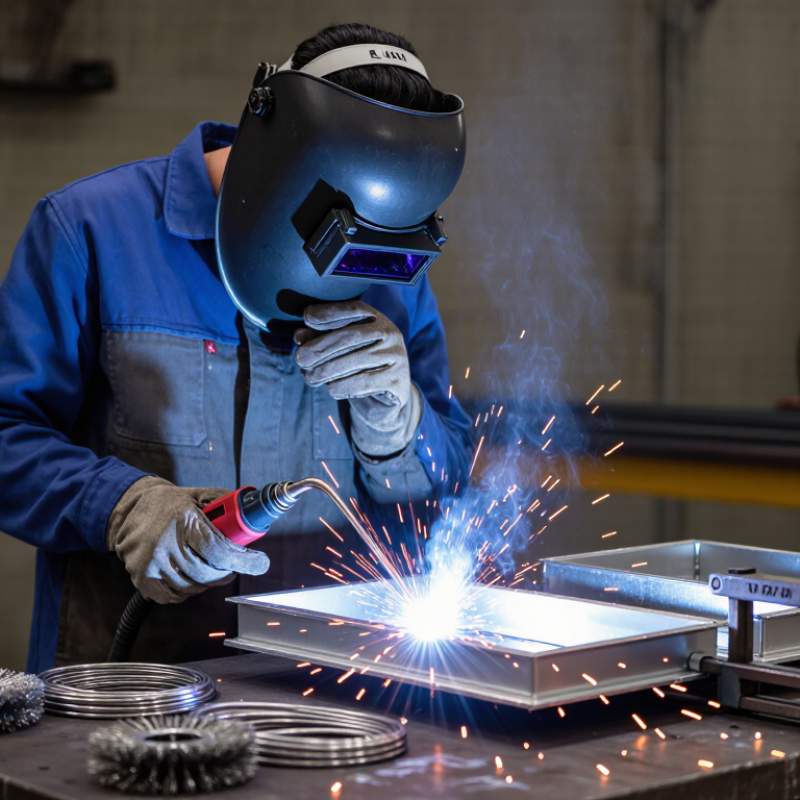
Aluminium welding joins aluminium parts by melting their edges and adding compatible filler metal. The process needs controlled heat because aluminium conducts heat quickly and forms an oxide layer almost instantly. That oxide melts at a much higher temperature than the base metal. Cleaning and preparation matter.
It is used when manufacturers need lightweight structures without sacrificing useful strength. Aluminium helps reduce vehicle weight, improve fuel efficiency, and support easier handling in transport equipment. It also resists corrosion in many outdoor and marine environments. Fabricators use it for frames, enclosures, tanks, platforms, and architectural components. In my experience, its light weight can make positioning easier, but thin sheets still distort easily.
The welding method depends on thickness, alloy, joint design, and production speed. Gas tungsten arc welding offers precise control for visible or delicate joints. Gas metal arc welding is often faster for longer seams and thicker sections. Shielding gas protects the molten pool from atmospheric contamination. Small changes in travel speed can affect penetration, bead shape, and porosity.
Preparation is not optional. It is the weak point. Operators usually remove oil, dirt, and oxide before welding, then store cleaned tools carefully. Excessive heat may weaken some heat-treated alloys near the joint. Poorly fitted edges can create gaps, burn-through, or expensive rework. Weld inspection and procedure testing help confirm strength, but no single method suits every aluminium application.
What Is Aluminium Welding and How Does It Work?
| Data Dimension | Key Fact | How It Works | Why It Matters in Aluminium Welding |
|---|---|---|---|
| Definition | Aluminium welding is the process of joining aluminium or aluminium alloys by applying heat, pressure, or both. | The joint area is heated until the base metal, filler metal, or both form a bonded connection. | It creates permanent joints for structures, components, tanks, frames, transport parts, and fabricated products. |
| Melting Point | Pure aluminium melts at approximately 660.3°C. | A controlled heat source melts the joint area while shielding protects the molten pool from atmospheric contamination. | Aluminium requires careful heat control because it melts at a relatively low temperature and can become distorted or burned through. |
| Surface Oxide Layer | Aluminium naturally forms a thin aluminium oxide layer that melts at a much higher temperature than the base metal. | The oxide is removed mechanically or disrupted electrically before and during welding. | Removing oxide improves arc stability, fusion, wetting, and weld cleanliness. A stainless-steel brush reserved for aluminium is commonly used for preparation. |
| Primary Heat Sources | Common processes include gas tungsten arc welding, gas metal arc welding, resistance welding, and laser welding. | An electric arc, electrical resistance, or concentrated laser beam supplies the energy required to form the joint. | The best process depends on alloy type, material thickness, production volume, joint design, appearance, and required strength. |
| Gas Tungsten Arc Welding | Often selected for precise, clean welds and thinner aluminium sections. | A non-consumable tungsten electrode creates the arc, while a separate filler rod may be added manually. | It provides excellent control and weld appearance but is generally slower than wire-fed processes. |
| Gas Metal Arc Welding | Often selected for higher deposition rates and medium-to-thicker aluminium work. | A continuously fed aluminium wire acts as both electrode and filler metal while shielding gas protects the arc and weld pool. | It is productive and suitable for fabrication, but wire feeding, torch setup, and heat input must be carefully controlled. |
| Alternating Current | Alternating current is widely used for aluminium tungsten-arc welding. | The alternating waveform helps balance penetration into the base metal with cleaning action on the oxide layer. | Correct current balance and frequency can improve arc control, penetration, and oxide removal. |
| Shielding Gas | High-purity argon is commonly used; helium or argon-helium mixtures may be selected for greater heat input. | The gas displaces oxygen, nitrogen, and moisture around the arc and molten weld pool. | Proper shielding reduces porosity, oxidation, discoloration, and unstable arc behavior. Gas flow must be sufficient but not turbulent. |
| Filler Metal | Filler alloy selection should match the base alloy, service conditions, strength requirements, and crack sensitivity. | The filler melts into the joint and contributes material to the weld bead. | Using an unsuitable filler can increase cracking, reduce corrosion resistance, or create an unwanted strength mismatch. |
| Thermal Conductivity | Aluminium conducts heat rapidly compared with many common structural metals. | Heat spreads away from the arc, so the welder may need sufficient starting energy and controlled travel speed. | Inadequate heat can cause incomplete fusion, while excessive heat can cause distortion, excessive penetration, or burn-through. |
| Joint Preparation | Cleanliness is essential because oil, moisture, paint, dirt, and oxide can contaminate the weld. | The joint is degreased, mechanically cleaned, fitted correctly, and kept dry before welding. | Good preparation reduces porosity and improves repeatability, weld strength, and surface quality. |
| Preheating | Moderate preheating may be used for thick sections or large heat sinks, subject to alloy and procedure limits. | Preheating reduces the amount of arc energy required to establish and maintain fusion. | It can improve fusion, but excessive temperature may reduce mechanical properties or increase distortion. |
| Common Defects | Typical defects include porosity, lack of fusion, hot cracking, distortion, oxide inclusions, and burn-through. | Defects may result from contamination, poor shielding, unsuitable parameters, incorrect filler, or excessive heat input. | Inspection, procedure qualification, correct storage of materials, and operator control are important for reliable joints. |
| Main Advantages | Aluminium is lightweight, electrically conductive, thermally conductive, and naturally corrosion resistant through its oxide film. | Welding joins aluminium components without adding mechanical fasteners across the entire joint. | Welded assemblies can reduce part count, weight, leakage paths, and manufacturing complexity. |
| Main Limitations | Aluminium welding is sensitive to contamination, heat control, oxide condition, alloy chemistry, and joint design. | The process requires suitable equipment, shielding, consumables, preparation, and trained operation. | Without proper control, aluminium joints can experience porosity, cracking, distortion, or reduced heat-affected-zone strength. |
| Typical Applications | Applications include lightweight frames, heat exchangers, pressure-related fabrications, marine structures, vehicle components, and general metal fabrication. | Sections are joined according to their required load, corrosion environment, thickness, and production method. | Aluminium welding is used when low weight, corrosion resistance, conductivity, or efficient fabrication is important. |
| Basic Welding Sequence | Prepare, clean, fit up, select parameters, establish shielding, weld, inspect, and finish. | The operator controls current, voltage, travel speed, wire feed, torch angle, gas flow, and heat input throughout the weld. | A consistent sequence improves weld quality and makes the process easier to monitor and repeat. |
Note: Actual welding parameters depend on the aluminium alloy, material thickness, joint design, welding position, equipment, filler metal, and applicable welding procedure.
Related Posts
-
10 Essential Tips for Laser Welding Aluminum Successfully
-
How to Choose the Best Aluminium Welding Technique for Your Needs?
-
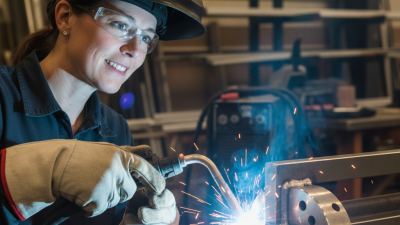
How to Master Aluminium Welding Techniques for Beginners?
-
Unlocking the Future: How Micro Welders Are Revolutionizing Precision Manufacturing
-
Understanding the Benefits of Fiber Laser Welding Machines: A Comprehensive Guide for Modern Fabrication
-
How to Use a Hand Held Laser Welding Machine Effectively?