2026 Top Handheld Welder Types for Global Buyers
Choosing the right handheld welder in 2026 requires more than comparing price tags and advertised power. Global buyers must examine welding materials, duty cycles, operator training, service access, and regional electrical standards. A compact machine may look efficient on a product page, yet perform poorly in a hot workshop or dusty fabrication area.
This guide examines major handheld welder types, including laser, MIG, TIG, and battery-supported solutions. Each type serves different production needs. A handheld laser welder may create clean seams on stainless steel, while a MIG unit can offer faster work on thicker steel. TIG equipment provides careful control around thin metals, especially where appearance matters. However, these advantages depend on correct settings, compatible accessories, and realistic operator skill.
Details matter. Check the torch weight, cable length, cooling method, wire or filler compatibility, and available replacement parts. Ask for verified technical documents, test samples, warranty terms, and training support. Do not trust impressive claims alone. Some specifications are difficult to compare fairly.
Safety remains essential. Buyers should confirm approved protective eyewear, ventilation requirements, grounding instructions, and emergency procedures. Local import rules and workplace standards may also affect purchasing decisions. This article offers practical comparisons based on equipment behavior, supplier reliability, and everyday workshop demands. It also recognizes an uncomfortable truth: the cheapest machine can become the most expensive choice when downtime, poor support, or inconsistent weld quality appears later. Nakne
Handheld Welder Basics and Core Operating Principles
2026 Top Handheld Welder Types for Global Buyers
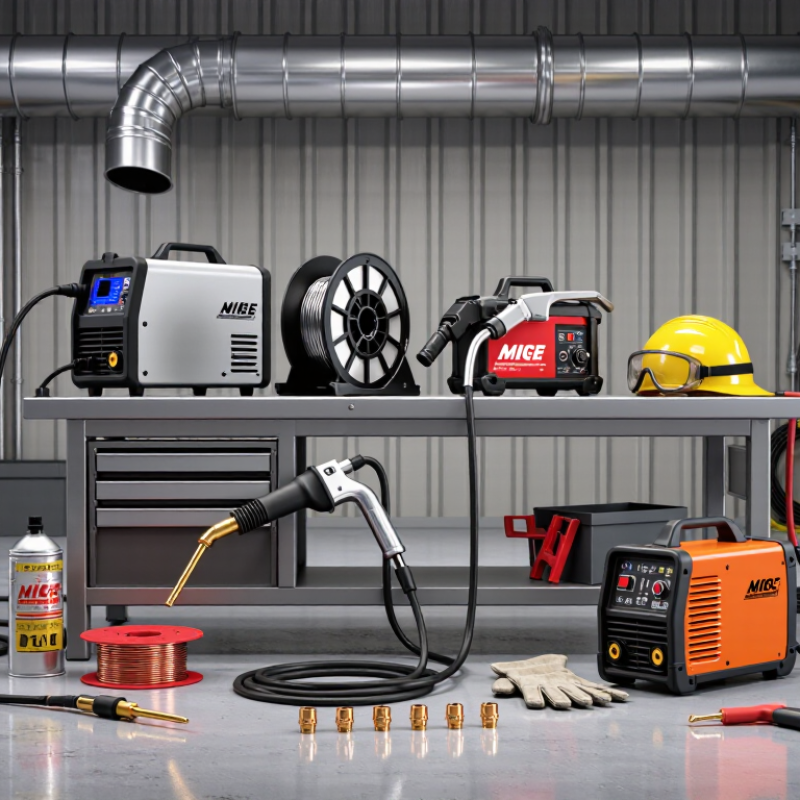
Handheld welder basics begin with controlled heat, electrical current, and surface preparation. Arc welders create heat through an electric arc between the electrode and workpiece. MIG models feed a wire continuously, while TIG models use a tungsten electrode and separate filler metal. Handheld laser welders concentrate a narrow beam, producing lower heat distortion on suitable metals.
Shielding gas protects the molten pool from oxygen and moisture. Gas flow, wire speed, travel speed, and amperage must work together. A poor setting can create porosity, undercutting, or an uneven bead. ISO 3834 stresses controlled welding quality, while IEC 60974-1 covers key requirements for arc-welding equipment. These standards do not replace operator judgment.
The International Federation of Robotics reported 541,302 industrial robot installations worldwide in 2023. This figure shows how quickly manufacturing is adopting controlled joining processes.
Yet manual welding remains important for repairs, prototypes, small batches, and awkward positions. In my experience, a clean bead can still hide weak penetration. That is easy to miss.
Buyers should check duty cycle, input voltage, torch cooling, grounding, and available service support. Market reports often predict strong growth for laser welding equipment, but estimates differ widely by region and application.
Tips:
Clean the joint until bright metal appears. Test settings on scrap first. Keep the torch angle stable. Record gas flow and amperage. Inspect penetration, not appearance alone. Safety equipment, ventilation, and trained operation remain essential.
Major Handheld Welder Types in 2026
2026 Top Handheld Welder Types for Global Buyers
In 2026, handheld welders mainly fall into fiber laser, MIG/MAG, TIG, and stick welding categories. Each type suits different materials, workshop conditions, and operator skills. Choosing by price alone can create expensive problems later.
Handheld fiber laser welders provide concentrated heat and fast travel speeds. They work well on stainless steel, carbon steel, and selected aluminum applications. Their clean seams can reduce grinding, but reflective metals require careful parameter control. MIG/MAG welders remain practical for fabrication and repair work. They use continuous wire and offer strong productivity on medium-thickness steel. Gas selection, wire diameter, and shielding quality directly affect penetration and spatter.
TIG welders deliver precise control for thin sheet, stainless steel, and visible joints. They require more coordination, especially when feeding filler by hand. Stick welders are less delicate but handle outdoor work and uneven surfaces reliably. They are useful where wind can disturb shielding gas. Not glamorous. Still dependable.
Global buyers should check duty cycle, input voltage, torch weight, cooling design, and available consumables. Local service capability matters as much as the machine’s rated power. Safety systems should include eye protection guidance, thermal safeguards, and suitable electrical certifications for the destination market. In practical trials, advertised speed may not match production speed. Operators need training, stable workholding, and realistic material tests. The right type is not always the newest one.
2026 Top Handheld Welder Types for Global Buyers - Major Handheld Welder Types in 2026
| Welder Type | Primary Process | Typical Output or Power Range | Common Materials | Typical Material Thickness | Main Advantages | Key Limitations | Typical Applications |
|---|---|---|---|---|---|---|---|
| Handheld Laser Welder | Fiber laser welding | Typically 1–3 kW for portable industrial systems | Carbon steel, stainless steel, aluminum, galvanized steel and selected alloys | Approximately 0.5–6 mm, depending on material, joint design and power | High travel speed, narrow heat-affected zone, low spatter and limited post-weld finishing | Higher purchase cost; requires strict eye protection, safety interlocks, training and controlled work areas | Sheet-metal fabrication, cabinets, kitchen equipment, automotive components and metal repair |
| Handheld MIG/MAG Welder | Gas metal arc welding with continuous wire | Typically 120–250 A for compact equipment | Carbon steel, stainless steel and aluminum with suitable wire and shielding gas | Approximately 0.8–6 mm in common fabrication work | High productivity, easy filler-metal feeding and suitable for long welds | Requires shielding gas, wire consumables and protection from strong drafts | General fabrication, vehicle repair, gates, frames, agricultural equipment and maintenance |
| Handheld TIG Welder | Gas tungsten arc welding | Typically 100–250 A; AC capability is used for aluminum | Stainless steel, carbon steel, aluminum, copper and titanium with appropriate setup | Approximately 0.5–5 mm for precision manual welding | Excellent arc control, clean weld appearance and precise heat input | Slower than MIG/MAG; requires greater operator skill and careful surface preparation | Pipework, bicycle frames, food-processing equipment, thin sheet and precision repair |
| Handheld Stick Welder | Shielded metal arc welding with coated electrodes | Typically 100–250 A for portable inverter units | Carbon steel, low-alloy steel, stainless steel and cast iron with suitable electrodes | Approximately 2–10 mm or more with multipass welding | Low equipment cost, no shielding-gas cylinder and good outdoor performance | Produces slag and smoke; less suitable for thin sheet and requires electrode changes | Construction, pipelines, structural repair, farm machinery and field maintenance |
| Handheld Resistance Spot Welder | Resistance spot welding using pressure and electrical current | Typically 2–16 kVA for portable spot-welding systems | Low-carbon steel, galvanized steel, stainless steel and selected sheet metals | Commonly about 0.5–3 mm total sheet stack, depending on equipment and material | Fast repeatable welds, no filler wire and minimal visible surface disturbance | Primarily for overlapping sheets; access is needed for electrodes and joint thickness is limited | Automotive panels, metal cabinets, appliance components and sheet-metal assembly |
| Handheld Hot-Air Plastic Welder | Heated-air thermoplastic welding | Typically 1–4 kW with adjustable air temperature | PVC, PE, PP, ABS and other compatible thermoplastics | Approximately 1–10 mm, depending on plastic type and welding method | Portable, lightweight and suitable for thermoplastic sheets, pipes and membranes | Cannot weld thermoset plastics; material compatibility and temperature control are critical | Plastic tanks, roofing membranes, ducts, liners, pipes and industrial plastic repairs |
Note: Performance ranges are typical industry-use values for portable equipment. Actual capacity depends on power supply, duty cycle, joint configuration, consumables, shielding gas, operator skill and material condition.
Key Specifications for Comparing Global Models
Handheld welders now cover fiber-laser, TIG, MIG, and compact plasma systems. Global buyers should compare specifications, not promotional power claims. A 1,500 W fiber-laser unit typically uses a 1,060–1,080 nm wavelength and supports rapid welding on thin stainless steel, carbon steel, and aluminum. TIG provides finer control, but it usually demands slower travel and stronger operator skill. MIG remains practical for thicker sections and continuous wire feeding.
Key specifications reveal real working differences. Check rated output, duty cycle, spot size, adjustable wobble width, wire-feed range, and cooling method. A 60% duty cycle means six minutes of operation within a ten-minute period. That matters in hot workshops. Also verify input voltage, machine weight, hose length, shielding-gas consumption, and nozzle availability. The 2024 Global Welding Equipment Market analysis by Research and Markets identifies automation and portable systems as major growth drivers, but market forecasts do not replace workshop trials.
Safety specifications deserve equal attention. IEC 60825-1 governs laser product classification, while ISO 11553-1 addresses laser-processing machinery safety. Buyers should request enclosure, interlock, emergency-stop, and eye-protection details. In practice, a lighter 25-kilogram unit may be easier to move, yet its smaller cooling system can limit continuous output. I would not trust a brochure alone. Test a 3–5 millimeter sample, inspect penetration, bead width, spatter, and heat distortion. One overlooked issue remains operator training. Fast welding can hide poor joint preparation.
Safety, Materials, and Job-Specific Selection
2026 Top Handheld Welder Types for Global Buyers
For global buyers, handheld welder selection should begin with the job, not the machine’s advertised power. Material thickness, joint access, production pace, and operator skill shape the practical choice. MIG equipment suits steady work on mild steel and aluminum, especially where speed matters. TIG offers cleaner control for stainless steel, thin sheet, and visible seams. Stick welding remains useful outdoors, where wind can disturb shielding gas. Portable laser systems may deliver narrow heat zones, but they require stricter training and controlled work areas.
Safety must match the material and workplace. A compact unit is not automatically safer. Operators need suitable helmets, gloves, flame-resistant clothing, eye protection, and adequate ventilation. Cleaning coatings from painted or treated metal is essential before welding. Some surfaces can release hazardous fumes when heated. Keep combustible materials away, inspect cables, and confirm grounding before operation. Check duty cycle carefully. Overlooking it can cause overheating during long production runs.
Job-specific testing is more reliable than choosing from specifications alone. Ask for sample welds on the actual material, thickness, and joint design. I once favored low weight and regretted it when poor cable reach slowed every repair. That mistake still matters. Buyers should compare control response, consumable access, maintenance support, and training requirements. Local electrical conditions and workplace rules also need verification. The most suitable handheld welder is the one operators can control safely, repeatedly, and without forcing the tool beyond its limits.
Purchasing, Compliance, and After-Sales Factors Worldwide
2026 Top Handheld Welder Types for Global Buyers
Handheld welders now include inverter arc, portable MIG, TIG, and handheld laser systems. Grand View Research estimates the global welding equipment market could reach about USD 21 billion by 2030, with energy efficiency driving demand. Published forecasts differ, so buyers should question impressive market figures. A compact inverter unit suits repair teams and remote sites. TIG offers cleaner control for stainless steel, but it demands more operator skill. Handheld laser models work quickly, yet they require stricter guarding and training.
Purchasing should begin with the job, not the catalogue. Check duty cycle, input voltage, weight, torch length, cooling method, and replacement-part availability. A 60% duty cycle may sound strong, but it can fall under high ambient temperatures. That detail is easy to miss. MarketsandMarkets identifies automation, portability, and productivity as major welding-equipment trends in its 2024 industry assessment.
Compliance varies by destination. Equipment should be reviewed against IEC 60974-1 for welding power sources and IEC 60974-10 for electromagnetic compatibility. Importers may also need electrical-safety, RoHS, WEEE, and local conformity documentation. Laser equipment needs extra attention to enclosure design, interlocks, warning labels, and protective eyewear. After-sales support matters more than a low invoice. Request manuals in the local language, remote diagnostics, calibration guidance, and a documented spare-parts schedule. The International Labour Organization estimates 2.93 million workers die annually from work-related causes, reinforcing the need for practical training, ventilation, and verified protective procedures. Pricing alone is not a purchasing strategy.
2026 Top Handheld Welder Types for Global Buyers
How to read this chart: The values show representative maximum input-power levels commonly found in portable welding equipment specifications. Actual ratings vary by output current, duty cycle, input voltage, material thickness, and regional electrical requirements.
Inverter TIG and MMA welders are widely used for maintenance and light fabrication. MIG/MAG units generally provide higher productivity for steel and aluminum work, while resistance spot welders require substantially higher peak current. Handheld laser welders typically require dedicated safety controls, trained operators, and verification against applicable laser and machinery regulations.
Compliance and after-sales checklist: Confirm electrical safety and EMC documentation, applicable conformity marking, plug and voltage compatibility, consumable availability, replacement-part support, operator training, warranty coverage, and local service capability. Arc-welding equipment is commonly evaluated against standards such as IEC 60974-1 and IEC 60974-10; laser equipment may also require laser-safety controls consistent with IEC 60825-1 and local regulations.